

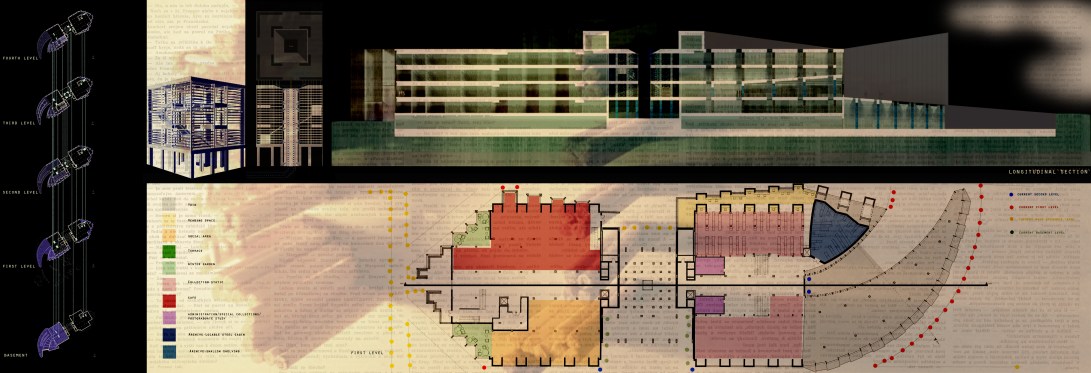
Concept is derived from the demonstration of natural forces and processes, merging architecture with the landscape it is set in. The library is being adapted and so it adapts to the environment, it cannot withstand the pressure anymore and thus a new entrance is seemingly created by the wind force that cuts through the west wing.
The building is born with light materials such as translucent glass, rises from the ground (every column in the archive changes an angle in the relation to the landscape until the last one stands upright). Then materials become more solid (semi-transparent brick wall), the interior arrangement progresses from student facilities for acquiring knowledge to the central book tower-an apex and the use of solid brick. Crossing this boundary, the library starts to age (phd study carrels and staff departments), it degrades and crumbles away while descending to the ground again.
From cradle to grave.
The central part is raised on columns enabling an external passage through the building.
A new façade is positioned in front of the old one while keeping existing structural supports and creating atmospheric quality with the use of semi-transparent brick wall.
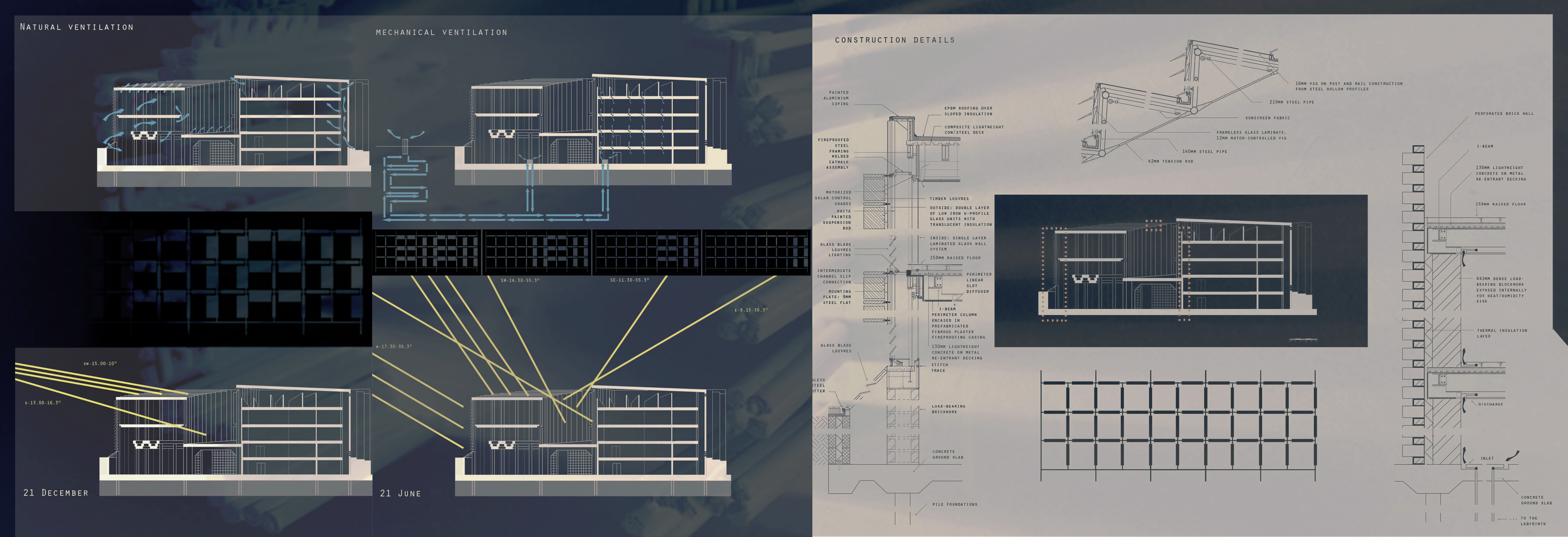
The central book tower forms a main circulation element, brings light into space, harvests rain water, provides ventilation and serves as storage for the increasing number of redundant books as digitalization progresses.
Winter gardens provide study spaces amongst greenery which can be enjoyed throughout the year even when the weather conditions are not favourable.
Timber louvers covering the west façade provide solar shading and automatically move with the sun thus enabling a different perception at all times and serving as a clock – analogy with a church since a library is considered to be a secular cathedral.

 zuzsojk